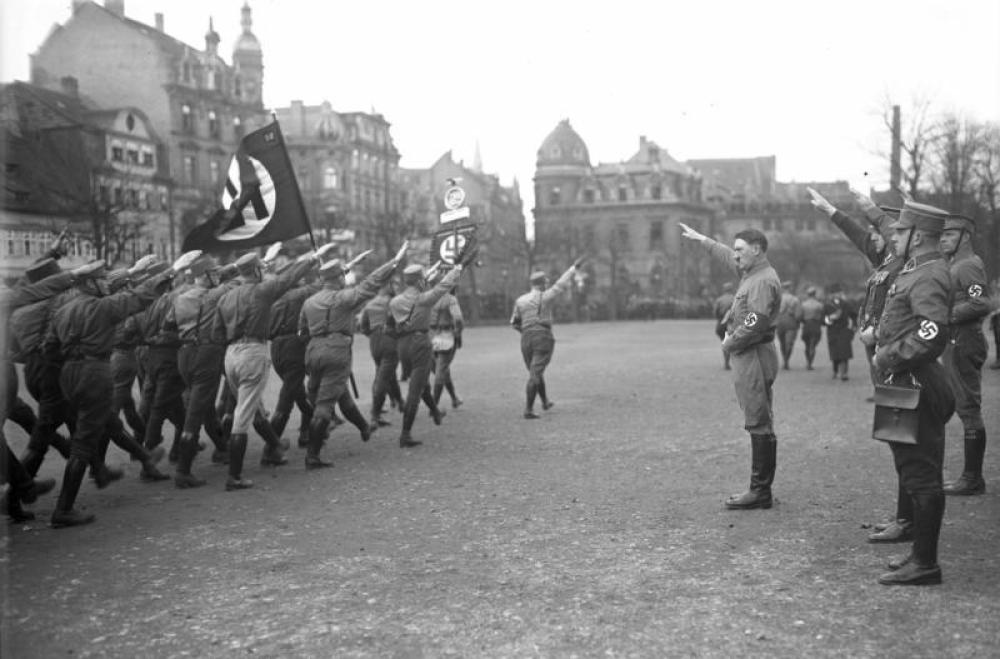
World War II lasted from September 1, 1939, to September 2, 1945, and involved more than 30 nations across Europe, Africa, Asia, and the Pacific. During six years of conflict, the war witnessed some of history’s most significant battles, political decisions, technological developments, and humanitarian tragedies.
This timeline provides a year-by-year overview of the key events that shaped the Second World War.
Quick World War 2 Timeline
| Year | Major Event |
|---|---|
| 1939 | Germany invades Poland |
| 1940 | Fall of France |
| 1941 | Pearl Harbor attack |
| 1942 | Battle of Midway |
| 1943 | Battle of Stalingrad ends |
| 1944 | D-Day landings |
| 1945 | Germany and Japan surrender |
1939: The War Begins
The conflict officially started when Germany invaded Poland.
September 1, 1939
German forces launched a Blitzkrieg attack against Poland.
September 3, 1939
Britain and France declared war on Germany.
September 17, 1939
The Soviet Union invaded eastern Poland.
Major Events of 1939
- Invasion of Poland
- Britain enters the war
- France enters the war
- Beginning of the European conflict
1940: Germany Dominates Western Europe
Germany achieved a series of rapid military victories.
April 1940
Germany invaded Denmark and Norway.
May 1940
Germany launched attacks against:
- Belgium
- Netherlands
- Luxembourg
- France
June 1940
France surrendered.
July–October 1940
The Battle of Britain took place.
Major Events of 1940
- Fall of France
- Dunkirk evacuation
- Battle of Britain
- Italy joins the war
1941: A Global War Emerges
1941 transformed the conflict into a worldwide war.
June 22, 1941
Germany launched Operation Barbarossa and invaded the Soviet Union.
December 7, 1941
Japan attacked Pearl Harbor.
December 8, 1941
The United States declared war on Japan.
December 11, 1941
Germany and Italy declared war on the United States.
Major Events of 1941
- Operation Barbarossa
- Pearl Harbor
- United States enters the war
- Expansion of the Pacific War
1942: Turning Points Begin
1942 saw major battles that shifted momentum toward the Allies.
June 1942
Battle of Midway.
The United States destroyed four Japanese aircraft carriers.
August 1942
Battle of Stalingrad begins.
October–November 1942
Second Battle of El Alamein.
November 1942
Operation Torch landings in North Africa.
Major Events of 1942
- Midway
- Stalingrad begins
- El Alamein
- North African offensives
1943: The Axis Begins to Retreat
The balance of power increasingly favored the Allies.
February 1943
Germany surrendered at Stalingrad.
July 1943
Battle of Kursk.
The largest tank battle in history.
July 1943
Allied invasion of Sicily.
September 1943
Italy surrendered.
November 1943
Tehran Conference.
Churchill, Roosevelt, and Stalin met to discuss strategy.
Major Events of 1943
- Stalingrad ends
- Kursk
- Italy exits Axis alliance
- Allied advances continue
1944: Liberation of Europe
The Allies launched major offensives against Germany.
June 6, 1944
D-Day landings in Normandy.
More than 150,000 Allied troops landed in France.
August 1944
Paris liberated.
September 1944
Operation Market Garden.
December 1944
Battle of the Bulge begins.
Major Events of 1944
- D-Day
- Liberation of Paris
- Western Front advances
- Battle of the Bulge
1945: The War Ends
The final year brought the collapse of the Axis Powers.
Europe
April 30, 1945
Adolf Hitler died in Berlin.
May 8, 1945
Germany surrendered.
Victory in Europe Day (VE Day).
Pacific
February–March 1945
Battle of Iwo Jima.
April–June 1945
Battle of Okinawa.
August 6, 1945
Atomic bomb dropped on Hiroshima.
August 9, 1945
Atomic bomb dropped on Nagasaki.
August 15, 1945
Japan announced its surrender.
September 2, 1945
Formal surrender aboard USS Missouri.
Victory over Japan Day (VJ Day).
Major Events of 1945
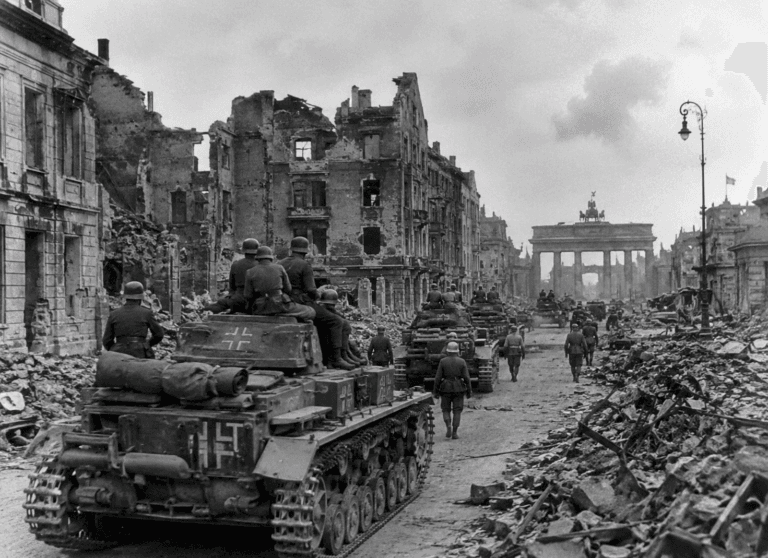
- Fall of Berlin
- Germany surrenders
- Hiroshima
- Nagasaki
- Japan surrenders
- End of World War II
Timeline of Major World War II Battles
| Battle | Year |
|---|---|
| Battle of Britain | 1940 |
| Operation Barbarossa | 1941 |
| Midway | 1942 |
| El Alamein | 1942 |
| Stalingrad | 1942–43 |
| Kursk | 1943 |
| D-Day | 1944 |
| Battle of the Bulge | 1944–45 |
| Iwo Jima | 1945 |
| Okinawa | 1945 |
World War 2 Timeline Infographic Summary
1939 → Poland Invaded
1940 → France Falls
1941 → Pearl Harbor
1942 → Midway
1943 → Stalingrad
1944 → D-Day
1945 → Germany Surrenders
1945 → Japan Surrenders
Frequently Asked Questions
When did World War 2 start?
September 1, 1939.
When did World War 2 end?
September 2, 1945.
What was the turning point of World War 2?
Many historians identify Stalingrad and Midway as major turning points.
What happened on D-Day?
Allied forces landed in Normandy on June 6, 1944.
What event brought the United States into the war?
The Japanese attack on Pearl Harbor.
Key Takeaways
- World War II lasted from 1939 to 1945.
- Germany’s invasion of Poland triggered the conflict.
- The fall of France reshaped Europe in 1940.
- Pearl Harbor brought the United States into the war.
- Midway and Stalingrad marked crucial turning points.
- D-Day accelerated the liberation of Europe.
- Germany surrendered in May 1945.
- Japan surrendered in September 1945.
- The war reshaped global politics and international relations.
Related Articles
- World War 2 History: Complete Timeline, Causes, Major Battles, and Global Impact
- When Did World War 2 Start and End?
- What Caused World War 2?
- Germany in World War 2
- Japan in World War 2
- Major Battles of World War 2
- Axis Powers vs Allied Powers
Leave a Reply