This is your first deep-dive battle article and will become a supporting page under:
- World War 2 History (Pillar)
- Major Battles of World War 2
- Germany in World War 2
- World War 2 Timeline
Battle of Stalingrad: The Turning Point of World War II
Introduction
The Battle of Stalingrad was one of the most significant and devastating battles of World War II. Fought between Nazi Germany and the Soviet Union from August 1942 to February 1943, the battle marked a major turning point on the Eastern Front and ultimately changed the course of the war in Europe.
What began as Germany’s attempt to capture a strategically important Soviet city became a brutal struggle that resulted in enormous casualties, the destruction of entire armies, and the collapse of Germany’s offensive momentum in the East.
By the end of the battle, the Soviet Union had achieved one of the most important victories of the war, while Germany suffered a defeat from which it would never fully recover.
Quick Facts About the Battle of Stalingrad
| Detail | Information |
|---|---|
| Battle | Battle of Stalingrad |
| Dates | August 23, 1942 – February 2, 1943 |
| Location | Stalingrad, Soviet Union |
| Belligerents | Germany vs Soviet Union |
| Outcome | Soviet Victory |
| Estimated Casualties | More than 2 million |
| Significance | Major turning point on the Eastern Front |
Why Was Stalingrad Important?
Stalingrad was located on the Volga River, one of the Soviet Union’s most important transportation routes.
The city was significant because:
- It controlled access to the Volga River.
- It protected routes to the Caucasus oil fields.
- It carried symbolic importance because it was named after Joseph Stalin.
Capturing Stalingrad would have provided Germany with both strategic and political advantages.
Germany’s 1942 Offensive
Operation Blue
After failing to capture Moscow in 1941, Germany launched a new offensive in southern Russia during the summer of 1942.
This operation, known as Case Blue, aimed to:
- Capture Soviet oil fields.
- Secure southern Russia.
- Cut Soviet supply routes.
- Capture Stalingrad.
Initially, German forces made rapid progress.
Many military leaders believed the city would fall quickly.
The German Advance Toward Stalingrad
Luftwaffe Bombing Campaign
In August 1942, German aircraft launched massive bombing raids against Stalingrad.
Thousands of civilians were killed.
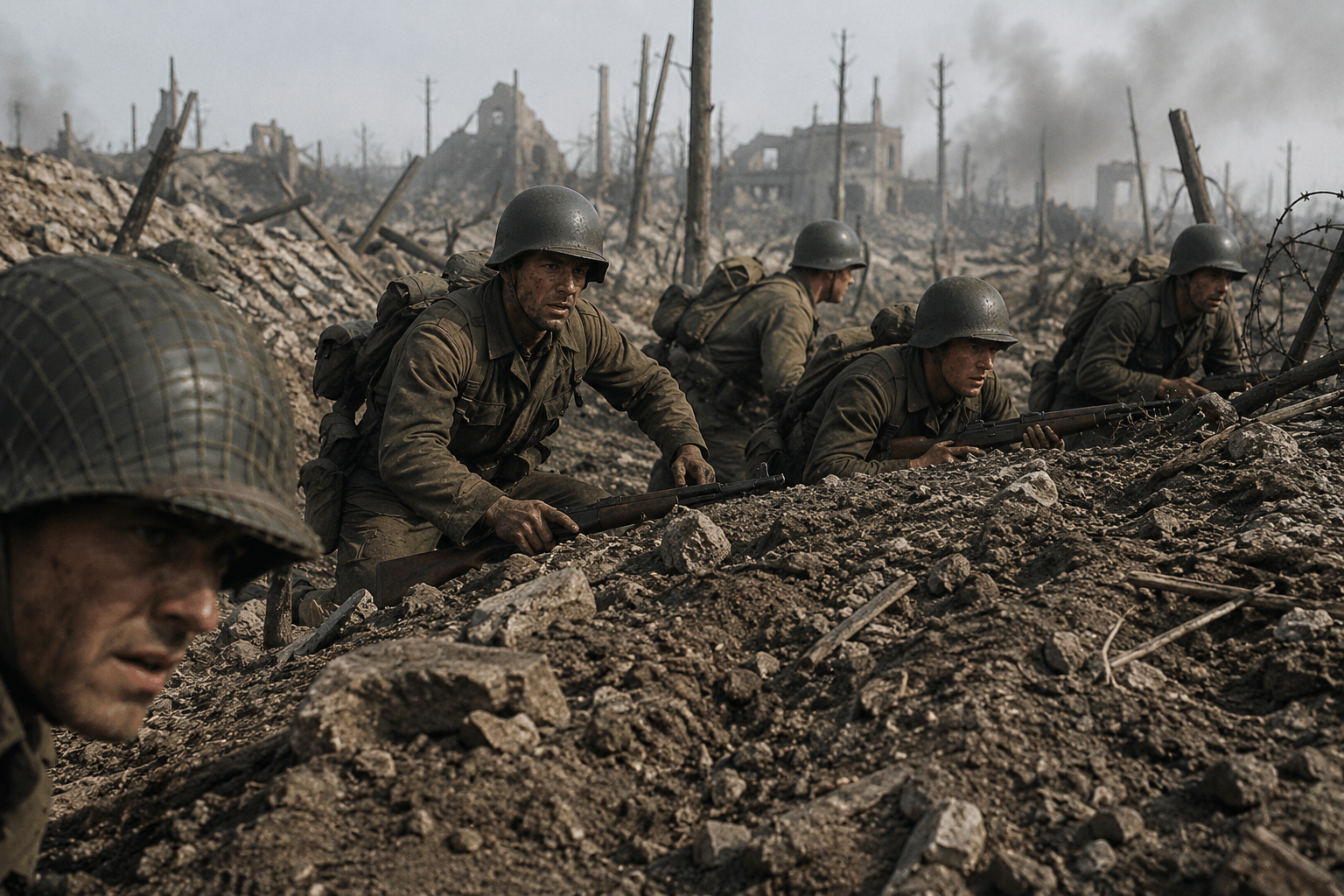
Large parts of the city were reduced to rubble.
Ironically, the destruction created ideal defensive positions for Soviet troops.
Collapsed buildings, factories, and ruins became strongholds throughout the battle.
Fighting in the City
House-to-House Warfare
The battle soon became one of the most intense urban conflicts in military history.
Soldiers fought:
- Street by street
- Building by building
- Floor by floor
- Room by room
The fighting became so close that artillery and air support often became difficult to use effectively.
“Not One Step Back”
Soviet forces received orders to hold the city at all costs.
Under Stalin’s directives, retreat was largely forbidden.
As a result, Soviet troops continued resisting despite enormous casualties.
The Role of Soviet Snipers
One of the most famous aspects of the battle was the use of snipers.
Vasily Zaitsev
Vasily Zaitsev became one of the most celebrated Soviet snipers of the war.
Operating among the ruins of Stalingrad, he reportedly eliminated hundreds of enemy soldiers.
His actions became a symbol of Soviet resistance.
Conditions During the Battle
Extreme Hardship
Both sides endured horrific conditions.
Soldiers faced:
- Freezing temperatures
- Food shortages
- Lack of medical supplies
- Constant combat
- Psychological exhaustion
Many troops survived in cellars, trenches, and destroyed buildings.
Civilian Suffering
Thousands of civilians remained trapped inside the city.
Many were killed during bombardments or died from hunger and exposure.
Operation Uranus: The Soviet Counteroffensive
November 1942
While German forces focused on fighting inside Stalingrad, Soviet commanders prepared a large counterattack.
Operation Uranus targeted weaker Axis forces guarding Germany’s flanks.
These units were primarily composed of:
- Romanian forces
- Hungarian forces
- Italian forces
Encirclement
The Soviet offensive successfully surrounded Germany’s Sixth Army.
More than 250,000 Axis troops became trapped inside Stalingrad.
The situation quickly became desperate.
Hitler Refuses Withdrawal
German commanders requested permission to withdraw.
Hitler refused.
He ordered the Sixth Army to remain in Stalingrad and continue fighting.
Failed Air Supply Effort
German leaders hoped the Luftwaffe could supply trapped troops by air.
However, weather conditions and Soviet resistance made this impossible.
Food, ammunition, and fuel shortages worsened.
The Collapse of the Sixth Army
By January 1943, German forces inside the city were starving and exhausted.
Soviet troops steadily reduced the encircled area.
Final Surrender
On January 31, 1943, Field Marshal Friedrich Paulus surrendered part of the German Sixth Army.
The remaining forces surrendered on February 2, 1943.
The battle was over.
Casualties of the Battle
The Battle of Stalingrad remains one of the deadliest battles ever fought.
Estimated casualties include:
| Side | Casualties |
|---|---|
| Germany and Axis Allies | 800,000+ |
| Soviet Union | 1,100,000+ |
| Civilians | Tens of thousands |
| Total | More than 2 Million |
Exact numbers vary among historians.
Why Stalingrad Was a Turning Point
End of German Expansion
Before Stalingrad, Germany had largely dictated the pace of the war in Eastern Europe.
After the battle, Germany increasingly fought on the defensive.
Soviet Momentum
The victory boosted Soviet morale and demonstrated that Germany could be defeated.
The Red Army began a series of offensives that eventually pushed German forces back toward Berlin.
Strategic Consequences
Germany lost:
- Experienced troops
- Equipment
- Strategic momentum
- Confidence
The defeat significantly weakened Germany’s ability to continue offensive operations.
Legacy of the Battle
Today, the Battle of Stalingrad is remembered as one of the most important battles in military history.
The city was renamed Volgograd in 1961, but Stalingrad remains the name most commonly associated with the battle.
Military academies around the world continue to study the battle for lessons in:
- Urban warfare
- Logistics
- Leadership
- Strategy
Interesting Facts About Stalingrad
The Battle Lasted More Than Five Months
The fighting continued for over 160 days.
The City Was Nearly Destroyed
Much of Stalingrad was reduced to ruins.
Hitler Promoted Paulus During the Battle
Hitler promoted Friedrich Paulus to Field Marshal, expecting him to fight to the end rather than surrender.
One of History’s Deadliest Battles
Combined casualties exceeded two million people.
The Volga Never Closed
Despite heavy fighting, Soviet forces continued crossing the Volga River to reinforce defenders.
Frequently Asked Questions
Why did Germany attack Stalingrad?
Germany sought to secure the Volga River and protect its advance toward the Caucasus oil fields.
Who won the Battle of Stalingrad?
The Soviet Union achieved a decisive victory.
Why is Stalingrad considered a turning point?
The battle ended Germany’s strategic offensive capabilities on the Eastern Front.
How many people died in Stalingrad?
More than two million military personnel and civilians were killed, wounded, captured, or missing.
Who was Vasily Zaitsev?
He was a famous Soviet sniper who became a symbol of resistance during the battle.
Key Takeaways
- The Battle of Stalingrad was fought between August 1942 and February 1943.
- Germany sought to capture a strategically important Soviet city.
- The battle became one of history’s most brutal urban conflicts.
- Soviet forces launched Operation Uranus and encircled the German Sixth Army.
- Germany suffered a devastating defeat.
- More than two million casualties were recorded.
- Stalingrad marked a major turning point in World War II.
- The Soviet victory shifted momentum permanently against Nazi Germany.
Leave a Reply