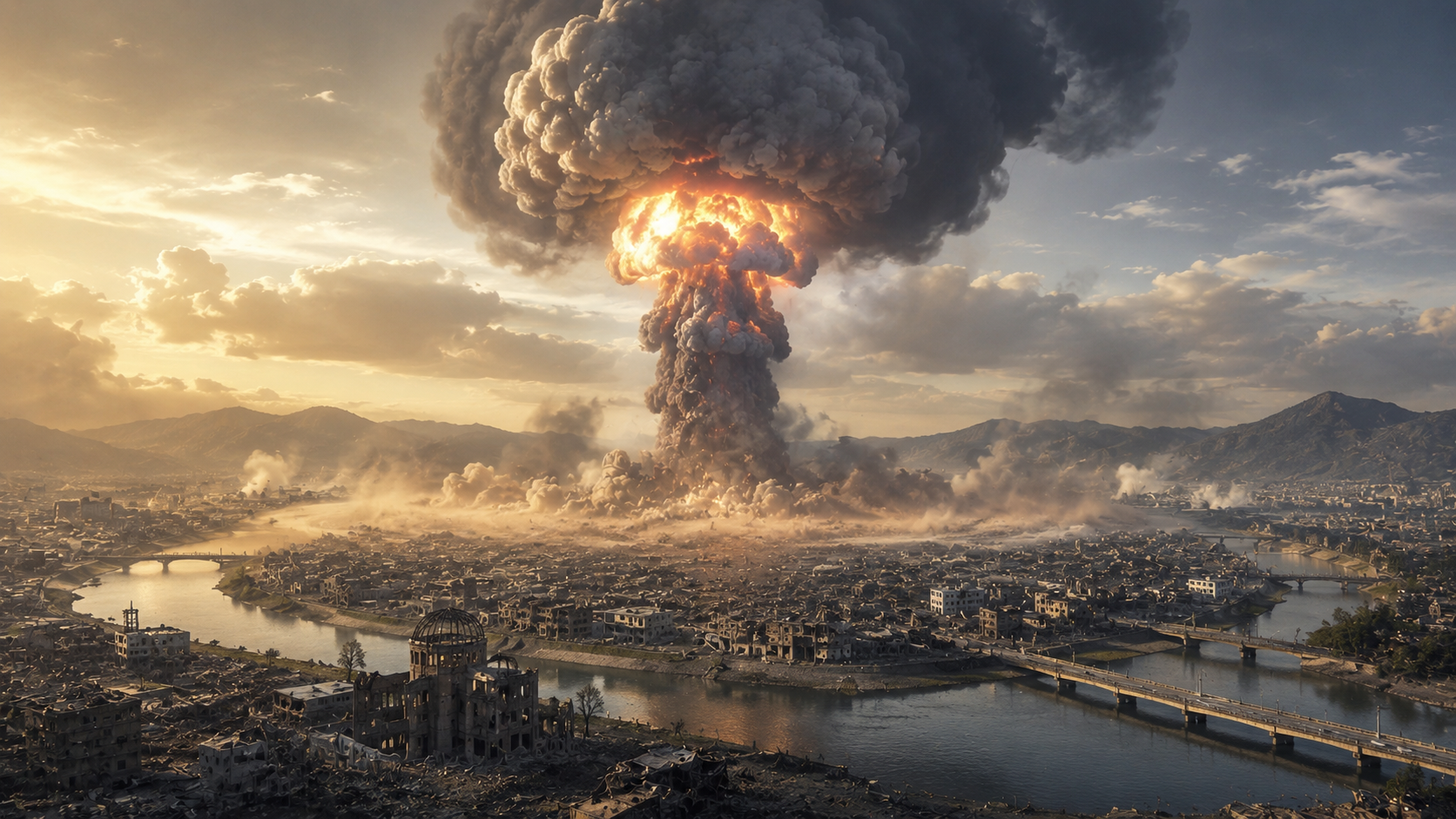
In August 1945, the United States dropped two atomic bombings on the Japanese cities of Hiroshima and Nagasaki, forever changing the course of human history. The bombings occurred during the final weeks of World War II and remain the only use of nuclear weapons in warfare.
The destruction was unprecedented. Entire sections of both cities were devastated within seconds, tens of thousands of people were killed immediately, and many more died later from injuries and radiation exposure.
The bombings played a major role in Japan’s decision to surrender, bringing World War II to an end and ushering in the nuclear age.
Quick Facts About Hiroshima and Nagasaki
| Detail | Hiroshima | Nagasaki |
|---|---|---|
| Date | August 6, 1945 | August 9, 1945 |
| Bomb Name | Little Boy | Fat Man |
| Aircraft | Enola Gay | Bockscar |
| Estimated Deaths (1945) | 140,000 | 70,000 |
World War II in August 1945
By the summer of 1945, Germany had already surrendered, ending the war in Europe. However, fighting continued in the Pacific as Japan resisted Allied demands for unconditional surrender.
Recent battles such as Iwo Jima and Okinawa had demonstrated how costly an invasion of Japan could become.
Allied planners feared that a full-scale invasion of the Japanese home islands could result in enormous military and civilian casualties.
The Manhattan Project
The atomic bombs used against Japan were developed through the Manhattan Project, a secret research program led by the United States with support from the United Kingdom and Canada.
The project brought together thousands of scientists, engineers, and military personnel.
The First Nuclear Test
On July 16, 1945, the world’s first successful nuclear weapon test took place in New Mexico.
Known as the Trinity Test, it demonstrated the destructive power of atomic weapons.
Why Was Hiroshima Chosen?
Hiroshima was selected because it was an important military and transportation center.
The city had suffered relatively little bombing compared to other Japanese cities, allowing planners to better measure the bomb’s effects.
August 6, 1945
At approximately 8:15 a.m., the B-29 bomber Enola Gay dropped the atomic bomb known as Little Boy over Hiroshima.
Within seconds, a massive explosion devastated the city.
The Destruction of Hiroshima
The explosion generated intense heat, powerful shockwaves, and widespread fires.
- Buildings were destroyed across large areas.
- Thousands died instantly.
- Fires spread rapidly throughout the city.
- Radiation exposure affected survivors.
By the end of 1945, an estimated 140,000 people had died as a result of the bombing.
The Atomic Bombings: Why Was Nagasaki Bombed?
Following Hiroshima, Japan had not yet accepted Allied surrender terms.
Three days later, a second atomic mission was launched.
August 9, 1945
The B-29 bomber Bockscar dropped the Fat Man atomic bomb over Nagasaki.
Although the city’s terrain limited some of the destruction, the impact remained devastating.
The Destruction of Nagasaki
Nagasaki suffered extensive damage from the blast and resulting fires.
- Industrial facilities were destroyed.
- Residential areas were devastated.
- Tens of thousands were killed.
- Many survivors experienced long-term health effects.
By the end of 1945, approximately 70,000 people had died from the bombing and its immediate consequences.
The Soviet Union Enters the War Against Japan
On August 8, 1945, the Soviet Union declared war on Japan and launched a major offensive in Manchuria.
The Soviet attack eliminated Japan’s hopes of negotiating peace through Moscow and added further pressure on Japanese leaders.
Japan Decides to Surrender
Following the atomic bombings and Soviet entry into the war, Japanese leaders debated their options.
Emperor Hirohito ultimately supported accepting Allied surrender terms.
August 15, 1945
Japan announced its intention to surrender.
September 2, 1945
Japan formally signed surrender documents aboard the USS Missouri in Tokyo Bay.
World War II officially ended.
Human Impact of the Bombings
The atomic bombings caused immense suffering.
Survivors faced:
- Burn injuries
- Radiation sickness
- Loss of family members
- Long-term health complications
Many continued experiencing health effects for decades.
Historical Debate
Historians continue to debate the necessity and impact of the atomic bombings.
Arguments Supporting the Decision
- May have prevented a costly invasion of Japan.
- Helped end the war quickly.
- Potentially reduced overall casualties.
Arguments Against the Decision
- Large civilian casualties occurred.
- Alternative options may have existed.
- Long-term radiation effects caused additional suffering.
The debate remains one of the most discussed topics in modern history.
The Beginning of the Nuclear Age
The bombings demonstrated the immense destructive power of nuclear weapons.
Following World War II, nations began developing and stockpiling nuclear arsenals, leading to the nuclear arms race of the Cold War.
The events of Hiroshima and Nagasaki continue to influence international discussions about nuclear weapons today.
Interesting Facts About Hiroshima and Nagasaki
- They remain the only cities attacked with nuclear weapons during war.
- The Hiroshima bomb used uranium.
- The Nagasaki bomb used plutonium.
- The bombings occurred just three days apart.
- World War II ended less than one month later.
Frequently Asked Questions
When was Hiroshima bombed?
Hiroshima was bombed on August 6, 1945.
When was Nagasaki bombed?
Nagasaki was bombed on August 9, 1945.
What were the names of the atomic bombs?
The bombs were called Little Boy and Fat Man.
Did the bombings end World War II?
The bombings, combined with the Soviet declaration of war, contributed significantly to Japan’s surrender.
Why are Hiroshima and Nagasaki important?
They marked the first and only use of nuclear weapons in warfare and changed global history.
Key Takeaways
- Atomic bombs were dropped on Hiroshima and Nagasaki in August 1945.
- More than 200,000 people died by the end of 1945.
- The bombings occurred during the final days of World War II.
- The Soviet Union also entered the war against Japan during this period.
- Japan surrendered shortly afterward.
- The bombings began the nuclear age.
- Their legacy continues to shape global politics and nuclear policy.
Conclusion
The atomic bombings of Hiroshima and Nagasaki were among the most consequential events of the twentieth century. They contributed to the end of World War II, transformed military strategy, and introduced the world to the realities of nuclear warfare. Their impact continues to be studied, debated, and remembered around the globe.
Related Articles
- Japan in World War 2
- Battle of Okinawa
- Battle of Iwo Jima
- World War 2 Timeline
- Major Battles of World War 2
- VE Day vs VJ Day
- End of World War 2
Leave a Reply