1933–1939
Adolf Hitler came to power, rebuilt Germany’s armed forces, and pursued territorial expansion, setting Europe on the path to war.
1939–1941
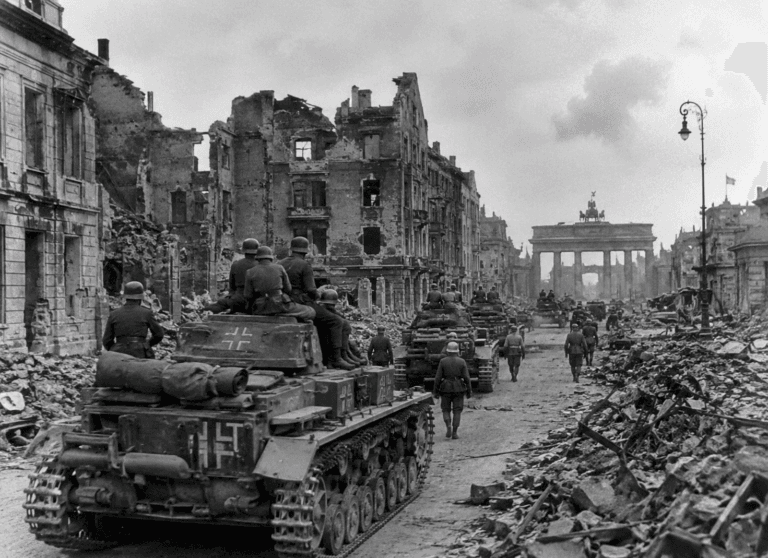
Germany achieved rapid victories using Blitzkrieg tactics, occupying much of Europe before launching Operation Barbarossa against the Soviet Union.
1942–1943
Defeats at Stalingrad and in North Africa ended Germany’s strategic momentum and shifted the initiative to the Allied powers.
1944
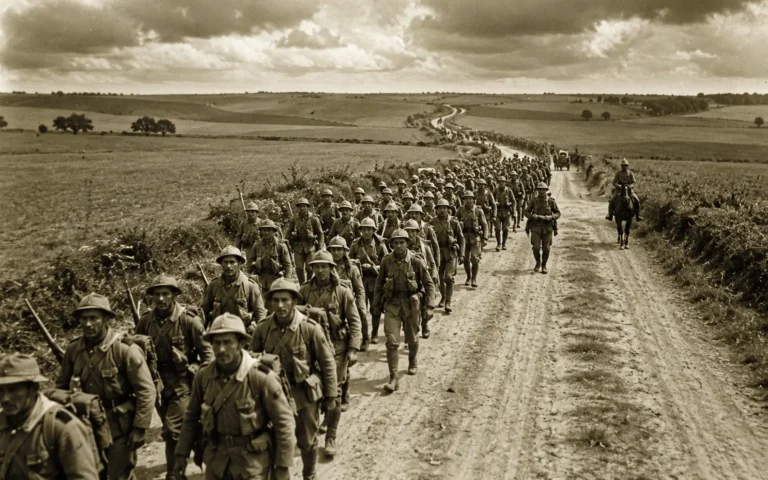
The Allied invasion of Normandy and the Soviet advance from the east steadily pushed German forces back toward their homeland.
8 May 1945
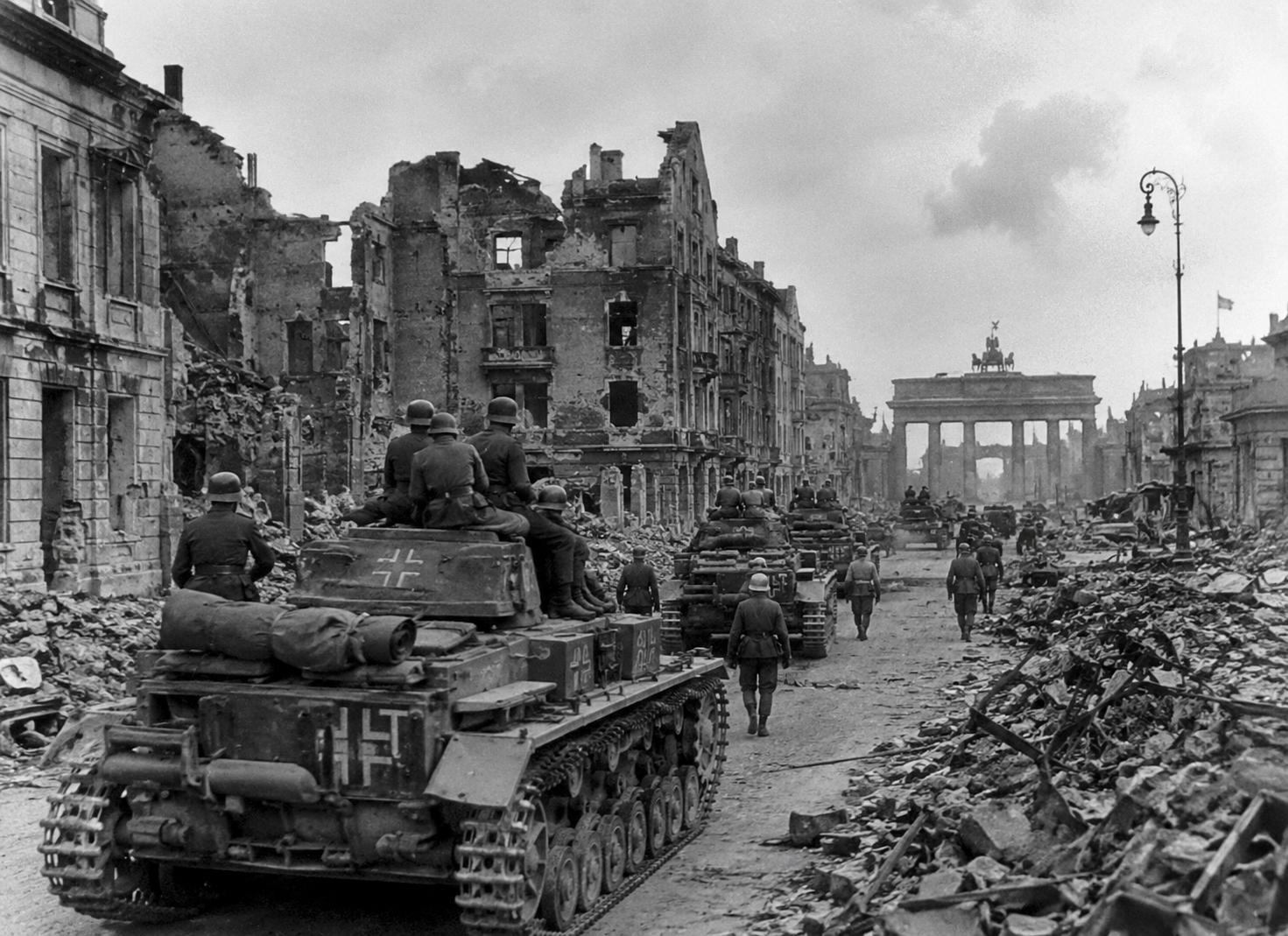
Germany surrendered unconditionally on Victory in Europe (VE) Day, ending the war in Europe after six years of devastating conflict.
Decode the strategy
Germany campaign cipher
Germany’s rapid attack strategy using coordinated tanks, aircraft, and infantry became known as __________.
Blitzkrieg, meaning “lightning war,” combined fast-moving armored units, air power, and infantry to overwhelm enemy defenses. It enabled Germany’s early victories across Poland, France, and other parts of Europe.
Decoded
Strategy identified. Continue exploring the campaigns that shaped Germany’s role in World War II.