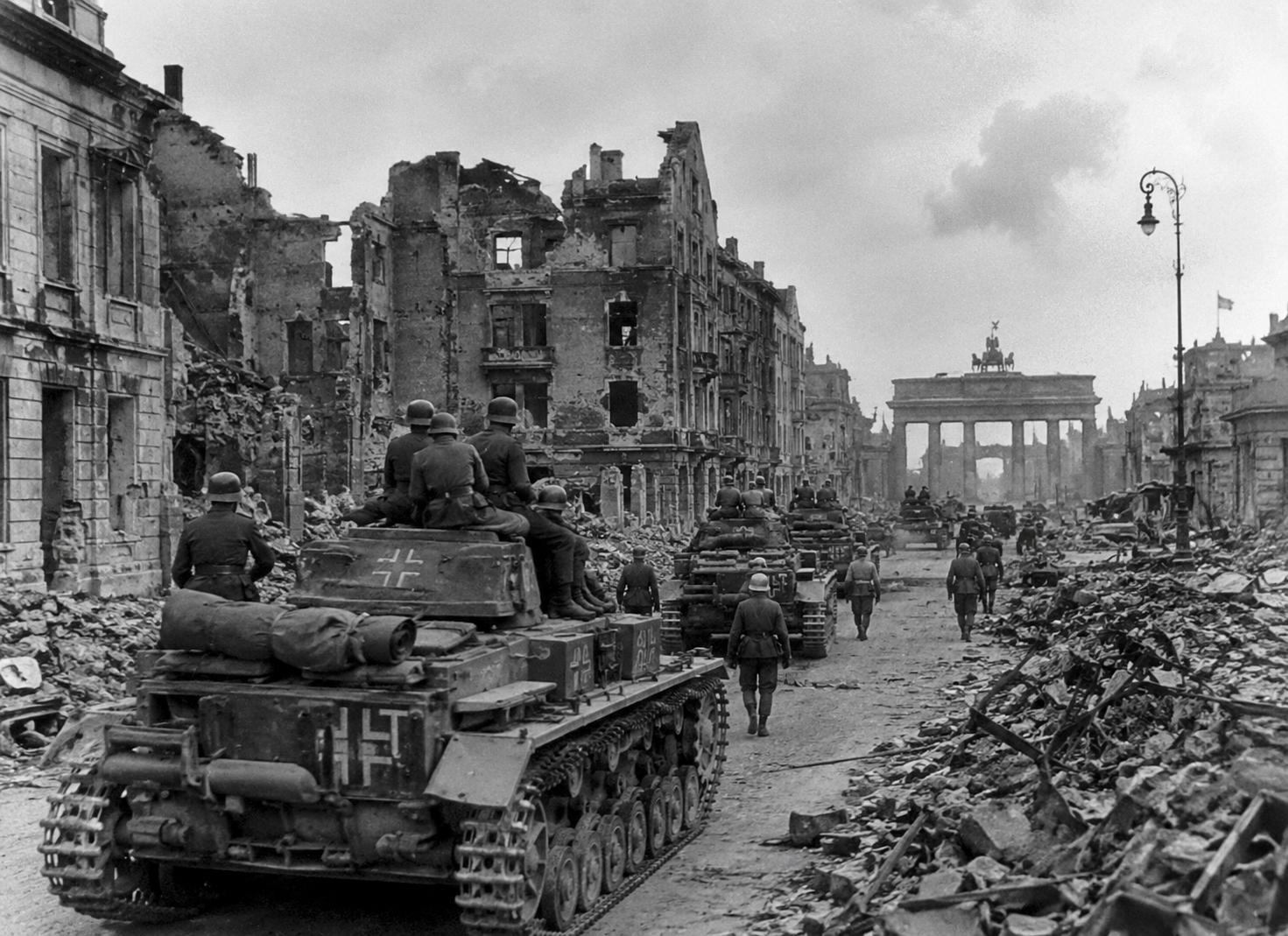
Germany played the central role in World War II. Under the leadership of Adolf Hitler and the Nazi Party, the country transformed from a defeated nation struggling with economic hardship into one of the most powerful military forces in the world. Germany’s aggressive expansion across Europe ultimately triggered the conflict that became World War II and shaped the course of modern history.
From the invasion of Poland in 1939 to the fall of Berlin in 1945, Germany’s actions influenced nearly every major event of the war. Understanding Germany’s rise, military campaigns, leadership, and eventual defeat provides valuable insight into one of history’s most significant conflicts.
In this article, we’ll explore how Nazi Germany rose to power, expanded across Europe, fought on multiple fronts, and ultimately collapsed under the pressure of Allied military forces.
Germany After World War I
At the end of World War I in 1918, Germany faced enormous political and economic challenges.
The Treaty of Versailles imposed harsh penalties on the country, including:
- Territorial losses
- Military restrictions
- Large reparations payments
- Acceptance of responsibility for the war
Many Germans viewed the treaty as humiliating and unfair.
Economic difficulties worsened during the 1920s and early 1930s, creating widespread dissatisfaction with the government and increasing support for radical political movements.
The Rise of Adolf Hitler and the Nazi Party
Adolf Hitler became Chancellor of Germany in January 1933.
He promised to:
- Restore German pride
- Rebuild the military
- Create jobs
- Reverse the Treaty of Versailles
Once in power, Hitler quickly consolidated authority and established a dictatorship.
Nazi Ideology
The Nazi Party promoted:
- Extreme nationalism
- Militarism
- Territorial expansion
- Racial supremacy
These ideas would heavily influence Germany’s domestic and foreign policies throughout the 1930s and 1940s.
Germany’s Rearmament
One of Hitler’s first priorities was rebuilding Germany’s military.
Despite restrictions imposed by the Treaty of Versailles, Germany rapidly expanded:
- The Army (Wehrmacht)
- The Air Force (Luftwaffe)
- The Navy (Kriegsmarine)
Military production increased dramatically.
New weapons included:
- Modern tanks
- Advanced fighter aircraft
- Submarines
- Artillery systems
By the late 1930s, Germany possessed one of the strongest military forces in Europe.
Germany’s Expansion Before World War II
Before the outbreak of war, Germany expanded its territory through a series of aggressive actions.
Remilitarization of the Rhineland (1936)
German troops entered the Rhineland, violating international agreements.
Britain and France chose not to intervene.
Annexation of Austria (1938)
Germany absorbed Austria into the Third Reich during the Anschluss.
Many Austrians welcomed unification, while others opposed it.
Sudetenland Crisis (1938)
Germany demanded control of the Sudetenland region of Czechoslovakia.
The Munich Agreement allowed Germany to annex the territory.
Occupation of Czechoslovakia (1939)
Hitler later occupied the remainder of Czechoslovakia, revealing that his ambitions extended beyond uniting German-speaking populations.
Germany Starts World War II
On September 1, 1939, Germany invaded Poland.
The attack used Blitzkrieg tactics, combining:
- Tanks
- Aircraft
- Motorized infantry
The strategy overwhelmed Polish defenses.
Two days later, Britain and France declared war on Germany.
World War II had begun.
Blitzkrieg: Germany’s Early Successes
Blitzkrieg, meaning “lightning war,” was Germany’s innovative military strategy.
Instead of slow-moving offensives, German forces used speed and coordination to break through enemy defenses.
Key Elements of Blitzkrieg
- Rapid armored advances
- Close air support
- Surprise attacks
- Communication and coordination
The tactic proved highly effective during the early years of the war.
Major German Victories (1939–1941)
Germany achieved a series of impressive victories.
Poland (1939)
Poland was defeated within weeks.
Denmark and Norway (1940)
Germany secured important strategic positions in Scandinavia.
France (1940)
France fell in just six weeks, shocking the world.
The victory left Britain standing alone in Western Europe.
Balkans Campaign (1941)
Germany quickly defeated Yugoslavia and Greece.
These successes expanded German influence across much of Europe.
The Battle of Britain
After defeating France, Germany planned to invade Britain.
Before an invasion could occur, Germany needed air superiority.
The Air Campaign
The Luftwaffe launched extensive bombing raids against:
- Airfields
- Factories
- Ports
- Cities
However, Britain’s Royal Air Force successfully defended the country.
Why It Mattered
The Battle of Britain became Germany’s first major defeat and prevented an invasion of the British Isles.
Operation Barbarossa: Germany Invades the Soviet Union
On June 22, 1941, Germany launched Operation Barbarossa, the largest military invasion in history.
More than three million German soldiers crossed into Soviet territory.
Initial Successes
German forces captured vast areas and surrounded large Soviet armies.
However, several problems emerged:
- Long supply lines
- Harsh weather
- Soviet resistance
- Shortages of fuel and equipment
Turning Point
The invasion failed to achieve its objectives, leading to a prolonged and costly war on the Eastern Front.
Germany and the Holocaust
One of the darkest chapters in history occurred under Nazi rule.
The Holocaust was the systematic persecution and murder of millions of people by the Nazi regime.
Victims included:
- Jews
- Roma people
- Political opponents
- Disabled individuals
- Other persecuted groups
Approximately six million Jews were murdered during the Holocaust.
The Holocaust remains one of the most horrific crimes in human history.
Germany’s Major Defeats
After 1942, Germany increasingly faced setbacks.
Battle of Stalingrad (1942–1943)
German forces became trapped and eventually surrendered.
Many historians consider Stalingrad the turning point of the war in Europe.
Battle of Kursk (1943)
Germany suffered heavy losses during the largest tank battle in history.
North Africa
Axis forces were defeated by Allied armies.
Allied Bombing Campaign
German cities and industries faced increasing damage from Allied air attacks.
These defeats weakened Germany’s ability to continue fighting.
D-Day and the Liberation of Western Europe
On June 6, 1944, Allied forces landed in Normandy, France.
The operation, known as D-Day, established a Western Front against Germany.
Allied Advance
After breaking out from Normandy, Allied forces liberated:
- Paris
- Belgium
- Luxembourg
- Parts of the Netherlands
Germany now faced major offensives from both east and west.
The Fall of Berlin
By early 1945, Germany’s defeat was inevitable.
Soviet forces approached Berlin from the east while Western Allies advanced from the west.
Final Battle
The Battle of Berlin became the last major battle in Europe.
Fierce fighting occurred throughout the city.
Hitler’s Death
On April 30, 1945, Adolf Hitler died in his bunker beneath Berlin.
His death marked the collapse of Nazi leadership.
Germany’s Surrender
German military leaders recognized that further resistance was impossible.
Germany signed an unconditional surrender on May 7, 1945.
The surrender took effect on May 8, celebrated as Victory in Europe Day (VE Day).
The war in Europe had ended.
Germany’s Legacy After World War II
The consequences of Germany’s defeat were enormous.
Division of Germany
Germany was divided into occupation zones controlled by:
- United States
- United Kingdom
- France
- Soviet Union
This division eventually led to the creation of:
- West Germany
- East Germany
War Crimes Trials
Leading Nazi officials were prosecuted during the Nuremberg Trials.
These trials established important legal principles regarding war crimes and crimes against humanity.
Reconstruction
Germany eventually rebuilt its economy and became one of Europe’s leading nations.
Key Dates in Germany’s World War II History
| Date | Event |
|---|---|
| January 1933 | Hitler becomes Chancellor |
| March 1936 | Rhineland remilitarized |
| March 1938 | Austria annexed |
| September 1938 | Munich Agreement |
| September 1, 1939 | Invasion of Poland |
| June 1940 | France defeated |
| June 22, 1941 | Operation Barbarossa |
| February 1943 | Stalingrad defeat |
| June 6, 1944 | D-Day |
| April 30, 1945 | Hitler dies |
| May 8, 1945 | Germany surrenders |
Frequently Asked Questions
Why was Germany responsible for World War II?
Germany’s invasion of Poland in 1939 triggered the war, and Nazi Germany pursued aggressive expansion throughout Europe.
Who led Germany during World War II?
Germany was led by Adolf Hitler and the Nazi Party.
What was Blitzkrieg?
Blitzkrieg was a military strategy that combined speed, surprise, tanks, aircraft, and infantry to achieve rapid victories.
Why did Germany invade the Soviet Union?
Hitler sought territorial expansion and believed Germany could quickly defeat the Soviet Union.
What was Germany’s biggest defeat?
Many historians consider the Battle of Stalingrad Germany’s most significant defeat.
When did Germany surrender?
Germany surrendered on May 8, 1945.
Leave a Reply