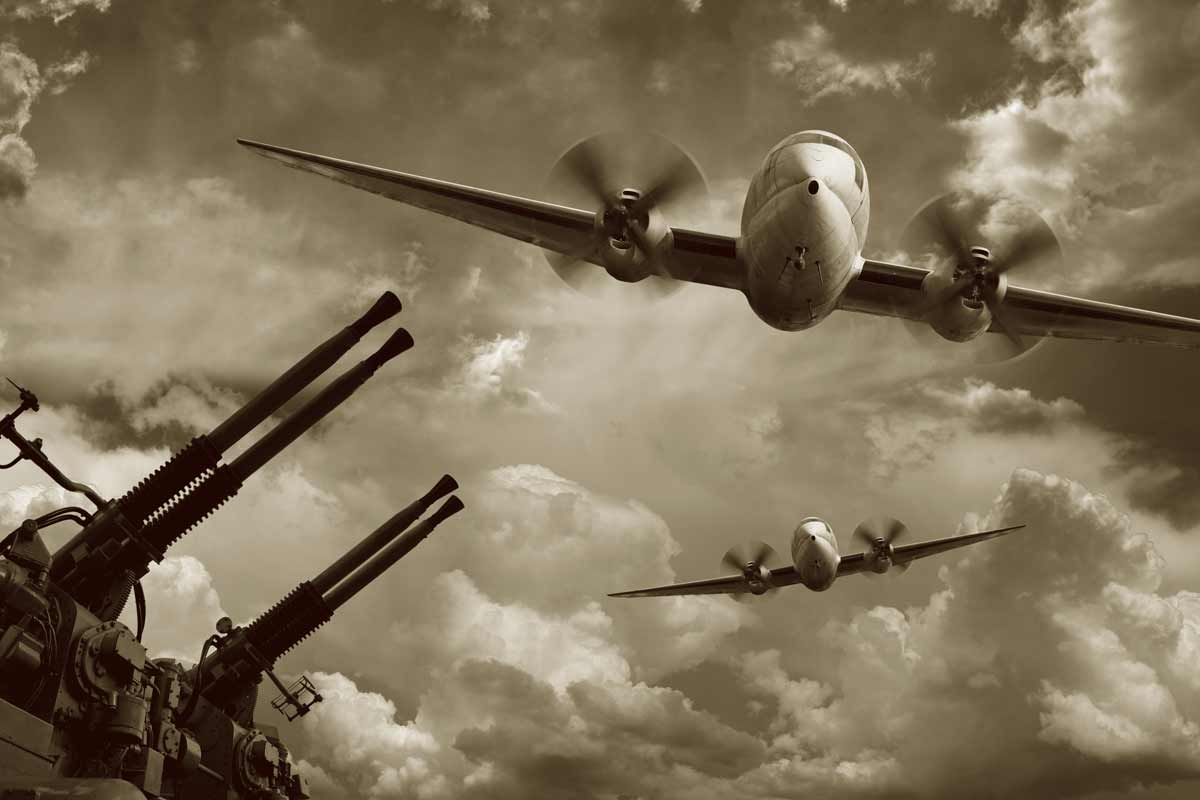
World War II was one of the largest and most devastating conflicts in human history, involving nations from nearly every continent. At the heart of the war were two opposing military alliances: the Axis Powers and the Allied Powers. These alliances brought together countries with different political systems, military objectives, and strategic interests, ultimately shaping the course of the conflict between 1939 and 1945.
The Axis Powers, led by Germany, Italy, and Japan, sought territorial expansion and greater influence across Europe, Africa, and Asia. The Allied Powers, led by the United Kingdom, the Soviet Union, the United States, China, and France, united to resist aggression and restore international stability.
Understanding who fought on each side provides valuable insight into how World War II became a truly global conflict and why the Allies ultimately emerged victorious.
What Were the Axis Powers?
The Axis Powers were a coalition of countries that cooperated politically and militarily during World War II. The alliance formally developed through a series of agreements during the 1930s and early 1940s.
The three principal Axis nations were:
- Germany
- Italy
- Japan
These countries shared ambitions of territorial expansion and sought to challenge the international order established after World War I.
Germany: The Leading Axis Power
Germany was the dominant force within the Axis alliance.
Under Adolf Hitler and the Nazi regime, Germany aimed to:
- Expand territorial control across Europe
- Reverse the Treaty of Versailles
- Establish German dominance on the continent
Germany’s invasion of Poland on September 1, 1939, officially triggered World War II in Europe.
Germany’s Military Strength
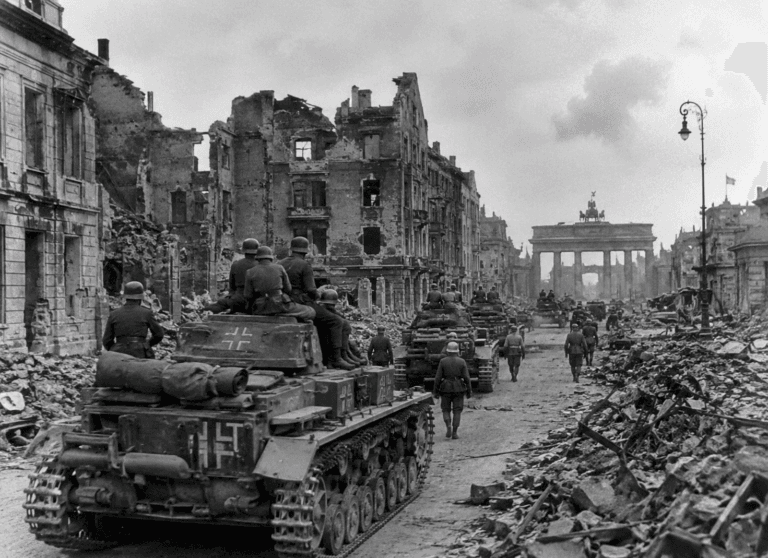
By the late 1930s, Germany possessed one of the most advanced military forces in the world.
Key advantages included:
- Modern tanks
- Advanced aircraft
- Effective battlefield coordination
- Blitzkrieg tactics
Early German victories included Poland, Denmark, Norway, Belgium, the Netherlands, and France.
Italy: Mussolini’s Fascist Empire
Italy joined Germany under the leadership of Benito Mussolini.
Mussolini envisioned a new Roman Empire and sought influence throughout:
- North Africa
- The Mediterranean
- The Balkans
Although Italy participated in several campaigns, its military often struggled against Allied forces.
Major Italian Campaigns
- Invasion of Ethiopia
- Campaigns in North Africa
- Invasion of Greece
Italy eventually surrendered to the Allies in September 1943.
Japan: Expansion Across Asia and the Pacific
Japan pursued aggressive expansion throughout East Asia and the Pacific.
Its goals included securing:
- Natural resources
- Strategic territory
- Regional dominance
Major Japanese actions included:
- Invasion of Manchuria (1931)
- War with China (1937)
- Expansion into Southeast Asia
- Attack on Pearl Harbor (1941)
Japan’s attack on Pearl Harbor brought the United States directly into the war.
Other Countries That Joined the Axis
Several nations aligned themselves with the Axis alliance.
Axis-Aligned Nations
| Country | Year Joined |
|---|---|
| Germany | Founding Member |
| Italy | Founding Member |
| Japan | Founding Member |
| Hungary | 1940 |
| Romania | 1940 |
| Bulgaria | 1941 |
| Slovakia | 1939 |
| Croatia | 1941 |
While these nations contributed troops and resources, Germany remained the dominant military power.
What Were the Allied Powers?
The Allied Powers were nations that united to oppose Axis aggression.
Unlike the Axis alliance, the Allies included countries with very different political systems and ideologies. What united them was a shared determination to defeat Germany, Italy, and Japan.
The principal Allied nations included:
- United Kingdom
- Soviet Union
- United States
- China
- France
Together, these countries formed the largest military coalition in history.
United Kingdom: Standing Alone
Following Germany’s invasion of Poland, Britain declared war on Germany on September 3, 1939.
For much of 1940 and 1941, Britain stood as Germany’s primary opponent in Western Europe.
Britain’s Major Contributions
- Battle of Britain
- North African campaigns
- Strategic bombing missions
- D-Day planning and execution
Prime Minister Winston Churchill became a symbol of resistance against Nazi Germany.
Soviet Union: The Eastern Front Giant
The Soviet Union joined the Allied cause after Germany launched Operation Barbarossa on June 22, 1941.
The Eastern Front became the largest battlefield of the war.
Key Soviet Victories
- Battle of Moscow
- Battle of Stalingrad
- Battle of Kursk
- Capture of Berlin
The Soviet Union suffered an estimated 27 million military and civilian deaths, the highest of any nation during the conflict.
United States: The Arsenal of Democracy
The United States entered World War II following Japan’s attack on Pearl Harbor on December 7, 1941.
American industrial capacity transformed the Allied war effort.
U.S. Contributions
- Aircraft production
- Naval dominance
- Economic support
- Troop deployments
- Pacific island campaigns
By the end of the war, the United States had become the world’s leading military and economic power.
China: Fighting Before the War Began
China had been resisting Japanese aggression since 1937.
Chinese forces tied down large numbers of Japanese troops throughout the conflict.
China’s Role
- Resistance against Japanese expansion
- Major Asian battlefield
- Key Allied partner in the Pacific Theater
China suffered millions of military and civilian casualties during the war.
France: From Occupation to Liberation
France was defeated by Germany in 1940 and occupied for much of the war.
However, French resistance movements and the Free French Forces continued fighting.
France’s Contributions
- Resistance operations
- Intelligence gathering
- Participation in liberation campaigns
- Post-D-Day military operations
French forces played an important role in the liberation of Western Europe.
Why Did These Alliances Form?
The Axis and Allied alliances emerged from opposing political and military objectives.
Axis Objectives
The Axis Powers sought:
- Territorial expansion
- Access to resources
- Military dominance
- Revision of international agreements
Germany wanted European dominance, Italy sought Mediterranean influence, and Japan aimed to control large parts of Asia.
Allied Objectives
The Allies sought:
- Protection of national sovereignty
- Defense against aggression
- Restoration of occupied territories
- Defeat of expansionist governments
As the war expanded, more nations joined the Allied coalition.
Axis Powers vs Allied Powers Comparison
| Category | Axis Powers | Allied Powers |
|---|---|---|
| Main Leaders | Hitler, Mussolini, Hirohito | Churchill, Roosevelt, Stalin |
| Main Countries | Germany, Italy, Japan | UK, USA, USSR, China, France |
| Goal | Expansion and conquest | Defeat aggression |
| Industrial Capacity | Strong but limited | Vast combined production |
| Population Base | Smaller | Larger |
| Naval Strength | Moderate | Superior |
| Outcome | Defeated | Victory |
Major Battles Between Axis and Allied Forces
Several battles determined the outcome of the war.
Battle of Britain (1940)
Germany attempted to gain air superiority over Britain.
The Royal Air Force successfully defended the country and prevented a German invasion.
Battle of Stalingrad (1942–1943)
One of the bloodiest battles in history.
The Soviet victory marked a major turning point on the Eastern Front.
Battle of Midway (1942)
American forces destroyed four Japanese aircraft carriers.
The battle shifted momentum in the Pacific toward the Allies.
D-Day (1944)
On June 6, 1944, Allied troops landed in Normandy, France.
The invasion opened a Western Front against Germany and accelerated the liberation of Europe.
Battle of the Bulge (1944–1945)
Germany launched its final major offensive in Western Europe.
The attack ultimately failed and exhausted Germany’s remaining resources.
Why the Allies Won World War II
Despite early Axis victories, several factors contributed to Allied success.
Superior Industrial Production
The combined production capacity of:
- United States
- Soviet Union
- United Kingdom
far exceeded that of the Axis Powers.
Factories produced millions of:
- Tanks
- Aircraft
- Ships
- Vehicles
- Weapons
Larger Resource Base
The Allies controlled vast natural resources and global trade routes.
This allowed them to sustain military operations for longer periods.
Strategic Cooperation
Allied leaders coordinated military operations through conferences and joint planning.
Major decisions were made at meetings such as:
- Tehran Conference
- Yalta Conference
- Potsdam Conference
Intelligence and Codebreaking
Allied codebreakers successfully deciphered critical German and Japanese communications.
Programs such as Ultra provided valuable intelligence that influenced military operations throughout the war.
Axis Strategic Mistakes
Several decisions weakened the Axis position:
- Germany invaded the Soviet Union.
- Japan attacked Pearl Harbor.
- Germany fought on multiple fronts simultaneously.
- Axis industrial output could not match Allied production.
These factors gradually shifted momentum toward the Allies.
Interesting Facts About the Axis and Allied Powers
| Fact | Detail |
|---|---|
| Largest Allied Country | Soviet Union |
| Largest Axis Power | Germany |
| Most Industrial Output | United States |
| Deadliest Front | Eastern Front |
| Largest Naval Battle | Leyte Gulf |
| Largest Amphibious Landing | D-Day |
| Soviet Casualties | Approx. 27 Million |
| Total Countries Involved | More than 50 |
Frequently Asked Questions
Who were the Axis Powers?
The principal Axis Powers were Germany, Italy, and Japan.
Who were the Allied Powers?
The main Allied Powers were the United Kingdom, United States, Soviet Union, China, and France.
Why did Italy join Germany?
Italy shared similar fascist ideologies and expansionist ambitions under Benito Mussolini.
Was the Soviet Union always part of the Allies?
No. The Soviet Union joined the Allied coalition after Germany invaded Soviet territory in 1941.
Which side won World War II?
The Allied Powers achieved victory in 1945.
Why did Japan join the Axis alliance?
Japan sought territorial expansion and greater influence across Asia and the Pacific.
What was the strongest Axis country?
Germany was the strongest military and political power within the Axis alliance.
Which Allied nation suffered the most casualties?
The Soviet Union suffered the highest number of casualties during the war.
Leave a Reply