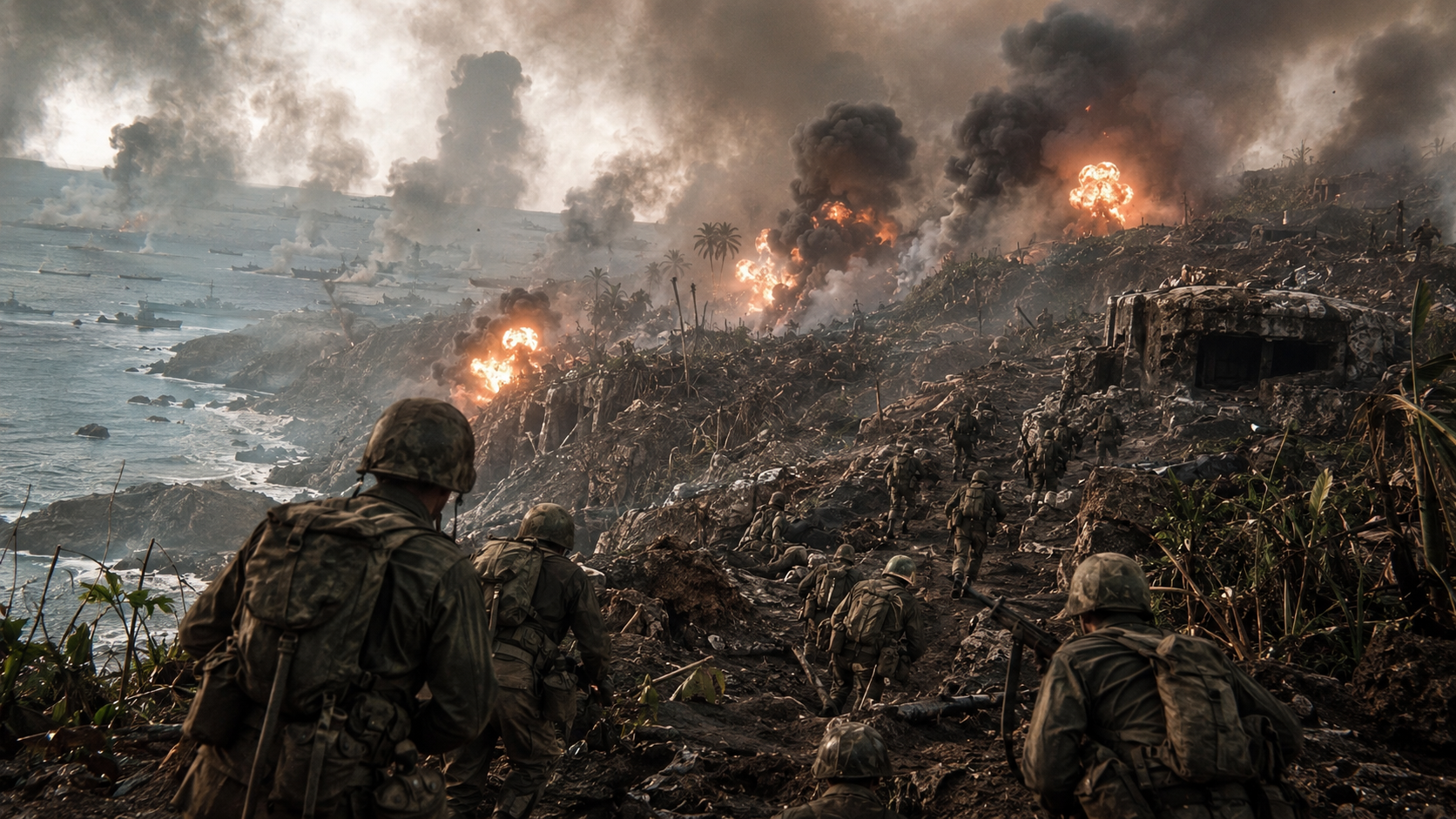
The Battle of Okinawa was the largest amphibious assault in the Pacific Theater of World War II and one of the bloodiest battles in modern military history. Fought between April 1 and June 22, 1945, the battle brought American forces to the doorstep of mainland Japan and demonstrated the enormous human cost of a potential invasion of the Japanese home islands.
Known as Operation Iceberg, the campaign involved hundreds of thousands of troops, massive naval forces, intense ground combat, and relentless kamikaze attacks. By the battle’s end, tens of thousands of soldiers and civilians had lost their lives, making Okinawa one of the deadliest battles of the Pacific War.
The lessons learned during the battle heavily influenced Allied decisions during the final months of World War II and ultimately played a role in the events that led to Japan’s surrender.
Quick Facts About the Battle of Okinawa
| Detail | Information |
|---|---|
| Battle | Battle of Okinawa |
| Operation Name | Operation Iceberg |
| Dates | April 1 – June 22, 1945 |
| Location | Okinawa, Ryukyu Islands, Japan |
| Belligerents | United States vs Japan |
| Outcome | Allied Victory |
| Significance | Final major battle before Japan’s surrender |
Where Is Okinawa?
Okinawa is the largest island in the Ryukyu Islands chain, located approximately 400 miles south of mainland Japan.
Its strategic location made it a critical objective for Allied planners. Capturing Okinawa would provide airfields, naval bases, and staging areas for future operations against Japan.
The island was close enough to support bombing missions and potential invasion plans targeting the Japanese home islands.
Why Was Okinawa Important?
By early 1945, Allied forces had captured numerous islands across the Pacific and were steadily advancing toward Japan.
Military planners believed Okinawa would:
- Provide a base for air operations
- Support naval blockades
- Serve as a staging point for a possible invasion of Japan
- Increase pressure on Japanese defenses
Because of its importance, Japanese commanders were determined to defend the island at all costs.
Japanese Defensive Strategy
Unlike earlier battles where Japanese forces attempted to stop Allied landings on beaches, commanders on Okinawa adopted a different strategy.
General Mitsuru Ushijima concentrated defenses inland, using the island’s terrain to his advantage.
Defensive Positions
Japanese troops constructed:
- Underground bunkers
- Hidden artillery positions
- Fortified caves
- Defensive tunnel systems
The strongest defenses were located in southern Okinawa, where natural ridges and hills created formidable defensive lines.
Operation Iceberg Begins
April 1, 1945
On Easter Sunday, Allied forces launched the invasion of Okinawa.
More than 180,000 American troops participated in the initial landings.
To the surprise of many soldiers, resistance on the beaches was relatively light.
However, the difficult fighting lay ahead.
Advance Across the Island
After securing the landing areas, American forces pushed inland.
Northern Okinawa was captured relatively quickly.
In the south, however, Japanese defenses proved extremely difficult to overcome.
The Shuri Line
The most heavily fortified area was known as the Shuri Line.
This defensive network included:
- Concrete fortifications
- Artillery positions
- Machine-gun nests
- Underground tunnels
American troops faced fierce resistance during weeks of intense combat.
Kamikaze Attacks
One of the most distinctive aspects of the Battle of Okinawa was the extensive use of kamikaze attacks.
Kamikaze pilots deliberately crashed aircraft into Allied ships.
Impact on Allied Naval Forces
Japanese kamikaze attacks caused significant damage to Allied fleets.
During the campaign:
- Dozens of ships were sunk
- Hundreds of vessels were damaged
- Thousands of sailors were killed or wounded
The attacks demonstrated Japan’s willingness to continue fighting despite overwhelming odds.
Conditions on Okinawa
The battle took place under extremely difficult conditions.
Weather Challenges
- Heavy rain
- Mud-covered terrain
- Limited visibility
- Poor road conditions
These factors complicated military operations and increased the hardships faced by both sides.
Close-Quarters Combat
Many battles involved hand-to-hand fighting, flamethrowers, grenades, and assaults on fortified caves.
The terrain often prevented rapid advances.
Civilian Casualties
The Battle of Okinawa caused immense suffering among civilians.
Hundreds of thousands of Okinawan residents found themselves trapped between the opposing armies.
Many civilians died due to:
- Combat operations
- Bombardments
- Starvation
- Disease
The civilian death toll remains one of the most tragic aspects of the battle.
The Death of Japanese Commanders
As Allied forces closed in on the remaining Japanese positions, defeat became inevitable.
On June 22, 1945, senior Japanese commanders, including General Ushijima, died during the final stages of the battle.
Organized resistance largely came to an end shortly afterward.
Casualties of the Battle
| Side | Estimated Casualties |
|---|---|
| United States | Approximately 49,000 casualties |
| Japan | More than 100,000 military deaths |
| Civilians | Over 100,000 deaths |
Exact figures vary among historians, but Okinawa remains one of the deadliest battles of the Pacific War.
Why Okinawa Influenced the End of the War
The battle provided Allied leaders with a preview of what an invasion of mainland Japan might look like.
Projected Invasion Casualties
Military planners feared that invading Japan would result in enormous losses on both sides.
The intense resistance on Okinawa reinforced these concerns.
Impact on Strategic Decisions
The battle influenced discussions regarding how best to end the war quickly while minimizing Allied casualties.
These considerations became part of the broader decision-making process during the final months of World War II.
Legacy of the Battle of Okinawa
Today, Okinawa remains an important symbol of the human cost of war.
Numerous memorials and museums commemorate:
- Military personnel
- Civilian victims
- The destruction caused by the battle
The battle continues to be studied by military historians worldwide.
Interesting Facts About the Battle of Okinawa
- It was the largest amphibious assault in the Pacific Theater.
- The campaign lasted nearly three months.
- More than 1,500 kamikaze missions were launched.
- The battle involved hundreds of thousands of troops.
- It was one of the last major battles of World War II.
Frequently Asked Questions
Why was Okinawa important?
Okinawa provided a strategic base close to mainland Japan and was considered essential for future military operations.
Who won the Battle of Okinawa?
The United States and Allied forces achieved victory after nearly three months of fighting.
What were kamikaze attacks?
Kamikaze attacks involved Japanese pilots deliberately crashing aircraft into enemy ships.
How many people died during the Battle of Okinawa?
More than 200,000 military personnel and civilians are estimated to have died during the campaign.
Why is Okinawa considered one of the bloodiest battles of World War II?
The battle produced extremely high military and civilian casualties due to fierce resistance and prolonged combat.
Key Takeaways
- The Battle of Okinawa was fought from April to June 1945.
- It was the largest amphibious assault in the Pacific Theater.
- Japanese forces relied heavily on fortified defenses and kamikaze attacks.
- The battle caused enormous military and civilian casualties.
- Okinawa provided a strategic base near mainland Japan.
- The battle influenced Allied planning during the final months of World War II.
- It became one of the last major battles before Japan’s surrender.
Conclusion
The Battle of Okinawa was one of the most significant and costly campaigns of World War II. Its scale, intensity, and human toll demonstrated the challenges of defeating Japan and highlighted the devastating consequences of modern warfare. The lessons learned during Okinawa shaped the final phase of the Pacific War and helped bring World War II closer to its conclusion.
Related Articles
- Japan in World War 2
- Battle of Iwo Jima
- Battle of Midway
- Pearl Harbor Attack
- World War 2 Timeline
- Major Battles of World War 2
- Hiroshima and Nagasaki
1 April 1945
Allied forces landed on Okinawa in Operation Iceberg, beginning the largest amphibious assault of the Pacific campaign.
Fierce Resistance
Japanese forces fought from fortified cave systems while large-scale kamikaze attacks targeted Allied naval forces offshore.
Heavy Losses
More than 80 days of intense combat resulted in enormous military casualties and devastating civilian suffering across Okinawa.
22 June 1945
Organized Japanese resistance ended, giving the Allies a strategic base only a few hundred miles from the Japanese mainland.
Path to Surrender
The battle’s staggering human cost influenced Allied planning and preceded the atomic bombings and Japan’s surrender later in 1945.
Decode this battle
Okinawa campaign cipher
During the Battle of Okinawa, Japan launched large-scale ________ attacks against Allied warships.
Okinawa saw the largest concentration of kamikaze attacks during World War II, with hundreds of suicide aircraft targeting Allied naval forces.
Decoded
Mission complete. Explore more decisive battles that shaped the final months of World War II.
Leave a Reply