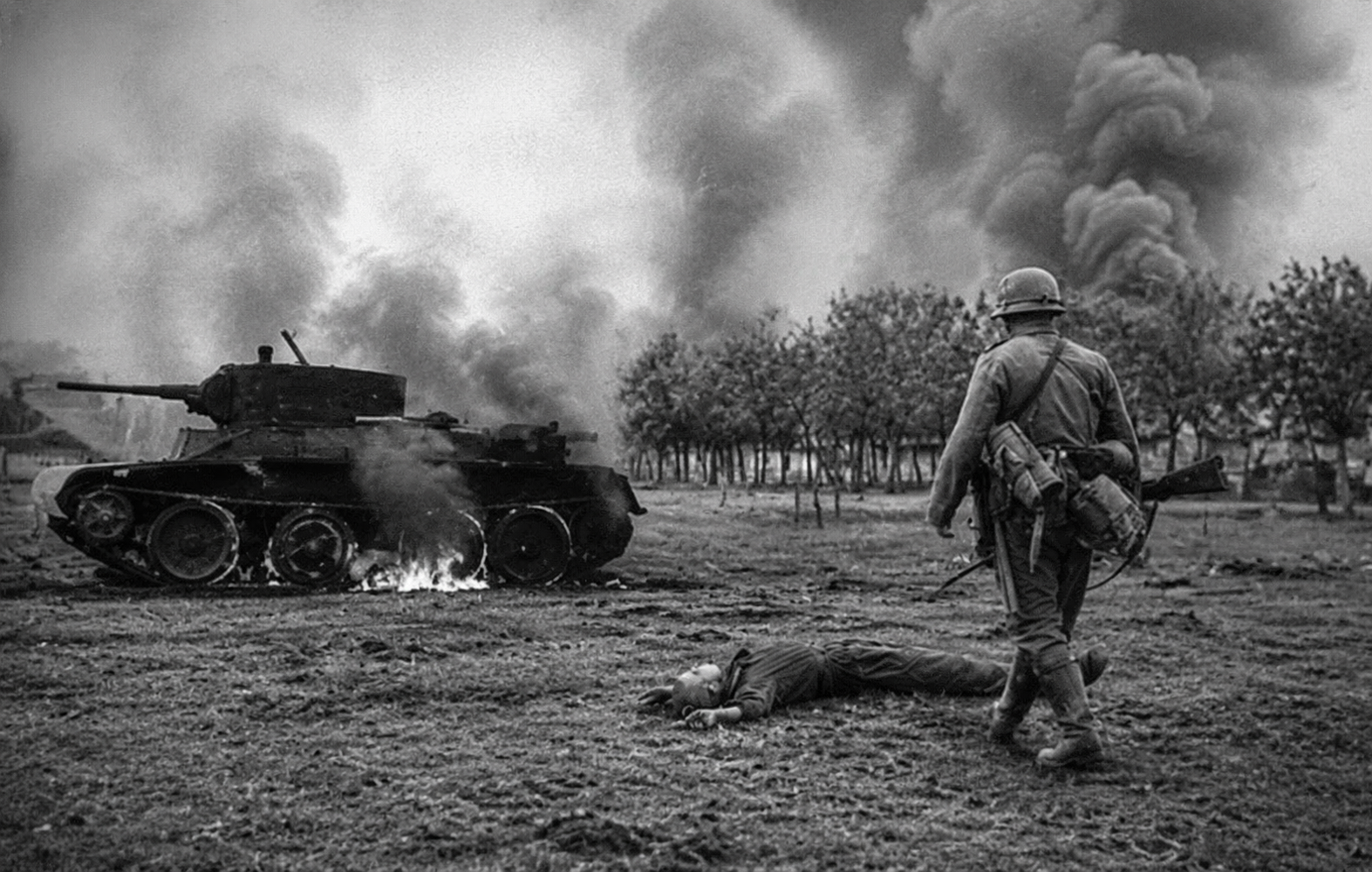
Adolf Hitler believed a rapid victory over the Soviet Union would secure Germany’s dominance in Europe, provide access to valuable resources, and eliminate what he viewed as Germany’s greatest long-term threat. Initially, German forces achieved remarkable successes, advancing deep into Soviet territory.
However, Operation Barbarossa ultimately became one of the greatest military failures in history. The campaign opened the Eastern Front, a brutal theater of war that would consume enormous resources and eventually contribute to the collapse of Germany.
Quick Facts About Operation Barbarossa
| Detail | Information |
|---|---|
| Operation Name | Operation Barbarossa |
| Start Date | June 22, 1941 |
| Location | Eastern Europe and Soviet Union |
| Belligerents | Germany vs Soviet Union |
| German Troops | Over 3 Million |
| Significance | Largest invasion in military history |
What Was Operation Barbarossa?
Operation Barbarossa was Germany’s surprise invasion of the Soviet Union during World War II.
The operation violated the Molotov-Ribbentrop Pact, a non-aggression agreement signed between Germany and the Soviet Union in 1939.
Despite the pact, Hitler had long intended to attack the Soviet Union and expand German control eastward.
Why Did Hitler Invade the Soviet Union?
Several factors motivated Germany’s decision.
Territorial Expansion
Hitler believed Germany needed additional territory and resources to support its growing population and economy.
Natural Resources
The Soviet Union possessed vast reserves of:
- Oil
- Coal
- Agricultural land
- Industrial resources
Ideological Conflict
Ideology viewed communism as a major enemy. Hitler saw the Soviet Union as both a political and military threat.
The Scale of the Invasion
Operation Barbarossa involved an unprecedented military force.
Germany and its allies deployed:
- More than 3 million troops
- Approximately 3,500 tanks
- Thousands of aircraft
- Hundreds of thousands of vehicles
The invasion front stretched for nearly 1,800 miles.
The Three Army Groups
The German attack was divided into three major offensives.
Army Group North
Advanced toward Leningrad (modern-day Saint Petersburg).
Army Group Center
Targeted Moscow, the Soviet capital.
Army Group South
Moved toward Ukraine and the resource-rich southern regions.
Initial German Successes
The Soviet Union was caught largely by surprise.
German forces rapidly advanced across Soviet territory.
During the first months of the campaign:
- Hundreds of thousands of Soviet troops were captured.
- Large areas of territory were occupied.
- Entire Soviet armies were surrounded.
Many observers believed the Soviet Union might collapse.
Soviet Resistance
Despite heavy losses, the Soviet Union continued fighting.
Scorched Earth Policy
Retreating Soviet forces destroyed infrastructure, crops, and supplies to prevent them from falling into German hands.
Mass Mobilization
Millions of Soviet citizens joined the military effort.
Factories were relocated eastward and continued producing weapons.
The Siege of Leningrad
One of the most devastating campaigns of the war occurred at Leningrad.
German forces surrounded the city and attempted to starve it into submission.
The siege lasted more than two years and caused immense civilian suffering.
The Drive Toward Moscow
By autumn 1941, German forces approached Moscow.
Many German commanders believed victory was near.
Operation Typhoon
The offensive aimed to capture the Soviet capital before winter.
However, several factors slowed the advance.
- Strong Soviet resistance
- Supply problems
- Poor roads
- Harsh weather
The Russian Winter
As temperatures dropped, German troops faced severe difficulties.
Many soldiers lacked adequate winter equipment.
Vehicles and weapons frequently malfunctioned in extreme cold.
The weather became one of several factors limiting German operations.
The Soviet Counteroffensive
In December 1941, Soviet forces launched a major counterattack outside Moscow.
Fresh troops from Siberia joined the defense.
The German advance was halted and pushed back from the capital.
This marked Germany’s first major strategic setback on the Eastern Front.
Why Operation Barbarossa Failed
Underestimating the Soviet Union
German planners expected a quick victory but underestimated Soviet manpower and industrial capacity.
Logistical Challenges
Supplying millions of troops across vast distances proved extremely difficult.
Harsh Conditions
Weather, terrain, and infrastructure created additional obstacles.
Soviet Determination
The Soviet Union continued fighting despite enormous losses.
Impact on World War II
Operation Barbarossa transformed the war.
The Eastern Front
The invasion opened the largest and deadliest theater of World War II.
German Resources Were Stretched
Germany became engaged in a prolonged war of attrition.
The Road to Stalingrad
The failure to defeat the Soviet Union quickly contributed to future campaigns such as the Battle of Stalingrad.
Casualties
The Eastern Front produced staggering losses.
| Category | Estimated Figures |
|---|---|
| Military Personnel Involved | Millions |
| Soviet Casualties | Several Million |
| German Casualties | Hundreds of Thousands |
Exact figures remain the subject of historical research.
Interesting Facts About Operation Barbarossa
- It was the largest invasion in military history.
- More than three million German troops participated.
- The front stretched nearly 1,800 miles.
- The operation began on June 22, 1941.
- Its failure helped change the course of World War II.
Frequently Asked Questions
What was Operation Barbarossa?
It was Germany’s invasion of the Soviet Union during World War II.
When did Operation Barbarossa begin?
The invasion started on June 22, 1941.
Why did Germany invade the Soviet Union?
Germany sought territory, resources, and strategic dominance in Eastern Europe.
Why did Operation Barbarossa fail?
Factors included logistical difficulties, Soviet resistance, weather conditions, and underestimation of Soviet capabilities.
Why is Operation Barbarossa important?
It opened the Eastern Front and contributed significantly to Germany’s eventual defeat.
Key Takeaways
- Operation Barbarossa began on June 22, 1941.
- It was the largest invasion in military history.
- Germany initially achieved rapid advances.
- The Soviet Union resisted despite massive losses.
- The invasion opened the Eastern Front.
- The failure of the operation contributed to Germany’s defeat.
- Operation Barbarossa remains one of the most studied campaigns in military history.
Conclusion
Operation Barbarossa was a turning point in World War II. What began as Germany’s ambitious attempt to defeat the Soviet Union quickly evolved into a prolonged and devastating conflict that drained German resources and shifted the balance of power on the Eastern Front. Its failure set the stage for Soviet victories that would eventually lead to the fall of Berlin and the end of Germany.
Related Articles
- Adolf Hitler: Rise, Rule, and Fall of Germany
- Germany in World War 2
- Battle of Stalingrad
- World War 2 Timeline
- What Caused World War 2?
- Fall of Berlin
- Axis Powers vs Allied Powers
Leave a Reply